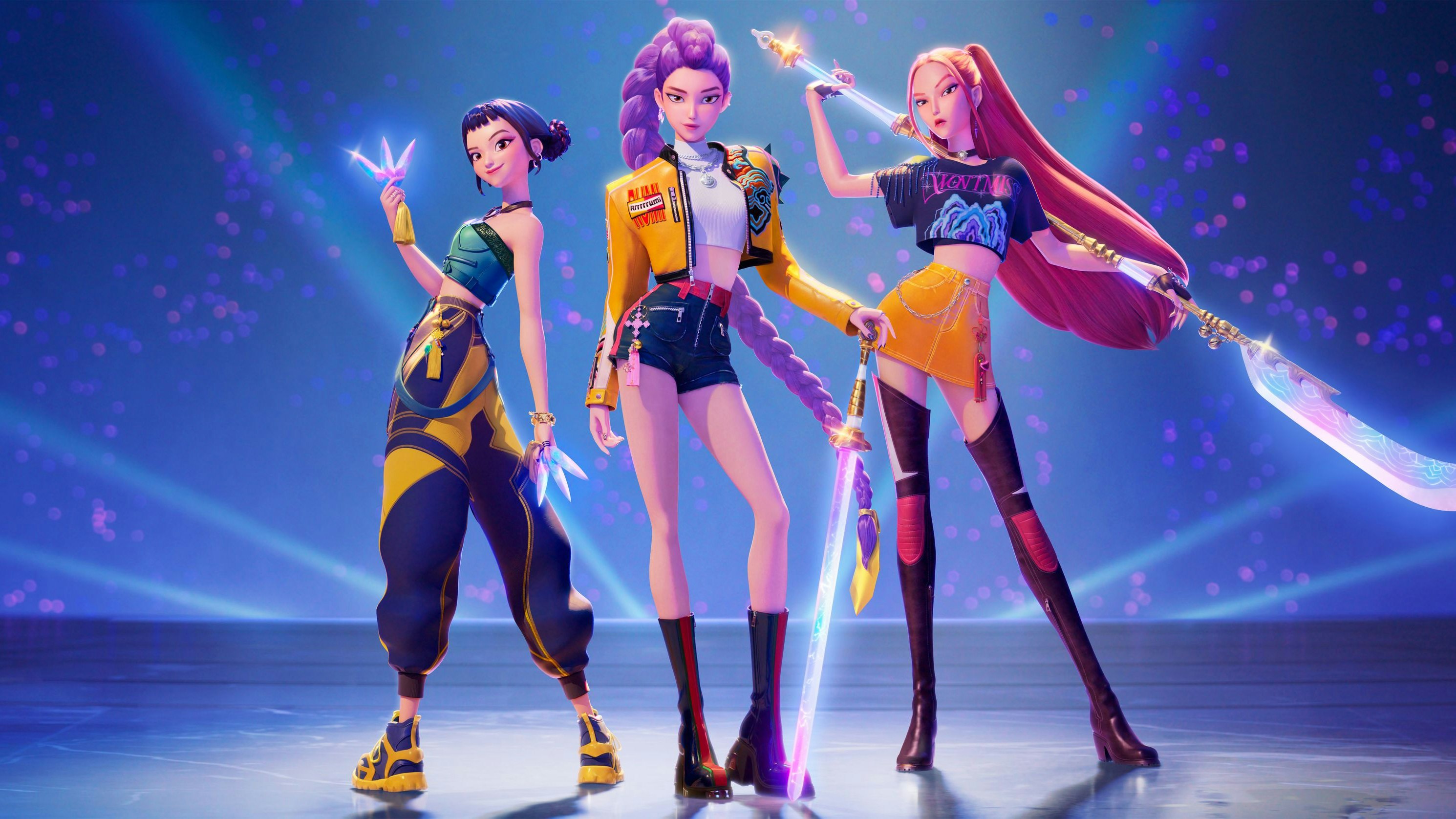
Directors Maggie Khan and Chris Appelhans’ Netflix Original film, “KPop Demon Hunters”, is a high-energy animated musical. The story follows Huntr/x, a K-pop girl group by day who go undercover as demon hunters by night. Rumi (voiced by Arden Cho and sung by EJAE), Mira (voiced by May Hong and sung by Audrey Nuna), and Zoey (voiced by Ji-young Yoo and sung by Rei Ami), use their singing to power a magical barrier called the Honmoon that keeps demons out of the human world. The combination of catchy music and action-packed fighting throughout the movie creates a hard-to-forget film that stands out from other animated movies.
The soundtrack is without a doubt one of the best aspects of the movie. Tracks like “How It’s Done” set the tone perfectly for battle. In contrast, “Golden” is more emotional, without slowing down the movie’s energy. Huntr/x’s rival group, Saja Boys, was sent by the demon king, Gwi-Ma, to steal their friends and weaken The Honmoon. They bring songs that are fun and catchy, but have enough edge to keep the tension high. The music in this film isn’t just background noise, but instead, it drives the plot forward, being used as a narrative device to reveal their demonic nature. This unique use of music helps you get to know the characters in a way that we don’t often see in other animated movies.
Visually, the animation is unique and electric. Fight scenes are choreographed on time with the song in the background, creating an interactive scene. Along with this, the bright colors flashing through your screen help keep the energy high. In addition, there are some slower moments in the film, which create emotional contrasts, further immersing the viewer in the demon saga.
Kpop Demon Hunters is smart, punchy and visually thrilling. It is hard to forget, for anyone who watches it. 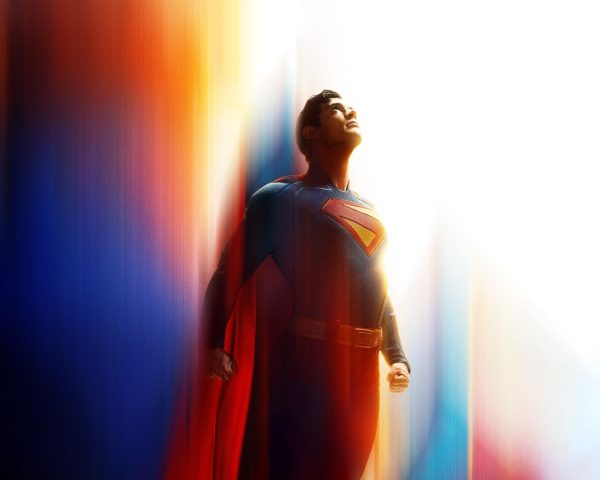
When James Gunn’s “Superman” was released on July 11, 2025, viewers poured into theaters worldwide to see David Corenswet portray Clark Kent. The box-office hit focused on Kent’s discovered past and his chosen path, which differs from many older Superman movies.
This fantastic story follows Kent as he learns to balance his work life, his relationship with his love interest, Lois Lane, along with saving the world from villain Lex Luthor. The film is a perfect reflection of self-discovery, positivity, and morality.
The fresh perspective of the new “Superman” comments on current political matters, such as violent conflict in the Middle East, power-hungry villains and unethical journalism. Along with global friction, the film highlights the importance of personal health, showing viewers conflicts in Kent’s relationships and within himself.
The overall message of the movie is to be kind and, in Kent’s words, “punk rock,” which fans find comforting. A notable scene shows Kent and Lane discussing their past love for punk rock music. Lane argues that Kent didn’t fit the description of a punk rock fan, but the latter points out that he saves and protects their city, saying, “Maybe that’s the real punk rock.”
The movie’s ultimate meaning is emphasized by Iggy Pop and The Teddybears’ “Punkrocker”, which is played at the end of the movie. The song quickly became a trend on social media, further spreading Gunn’s point from “Superman.”
After over a decade of far darker movies and TV shows about Superman, Gunn’s more hopeful story and visually brighter film stands out from Zack Snyder’s renditions of the character. In Snyder’s interpretation, Superman, played by Henry Cavill, struggled with a conflict inside himself and wore dark, muted colors that highlighted his physique. The new movie shows Corenswet dressed in more vibrant and modest clothing, which is not only more accurate to the original comics, but also symbolises a shift to positivity. Corenswet’s portrayal also features more of Kent outside of fighting villains, which was lost in Snyder’s movies.
The more family-friendly and hopeful nature of this Superman perfectly balances the heavy topics discussed in the story. Compared to older portrayals of Superman, this version of the beloved character better reflects what the audience needs: hope.

Director Yorgos Lanthimos’ new project “Bugonia” follows Michelle Fuller (played by Emma Stone), a wealthy CEO at a major company, Teddy (played by Jesse Plemons) and Don (played by Aiden Delbis). Teddy and Don are conspiracy theorists who kidnap Michelle because they believe she is an alien plotting to destroy the earth. The film is an absurd and brilliant critique of the ultra-wealthy and the way that they exploit and dehumanize the marginalized people, as well as how oppressed people can fall into conspiracies and violence.
One of the main characters, Don, who serves as Teddy’s skeptical sidekick and the moral compass of the movie, is written as and played by Delbis, an autistic man. Throughout the movie, we see Teddy manipulating Don to go along with his plans, while Don reluctantly agrees. Teddy consistently says that he is doing all of this to look out for Don. At the same time, Michelle repeatedly attempts to use Don to help her escape or hurt Teddy.
This is an interesting exploration of how disabled people are weaponized on both sides while their actual needs are ignored. It’s refreshing to see a realistic depiction of a disabled character in Hollywood who isn’t dehumanized. Don gives the movie the emotion and heart that it needs to be more than just an absurd satire. His and Teddy’s complicated relationship and love for one another add a touching reality to the movie and Don’s innocence and good-heartedness prevent the movie from feeling hopeless.
For the first two acts, I was worried that it would side with the ultra-wealthy. The beginning of the movie is more comedic, seemingly ridiculing the absurdity of Don and Teddy’s beliefs and painting Michelle as a rational hero. However, the third act really saves the whole project. The audience’s perspective of the beginning of the movie shifts and it’s revealed that Michelle had been secretly manipulating Teddy and Don, just as the ultra-wealthy are constantly manipulating the lower classes into subservience.
Each of the three stars nailed their roles. Stone masterfully balanced being simultaneously evil, determined and totally helpless. Her use of corporate HR speech while speaking to her kidnappers is also absolutely genius. Stone’s character repeatedly asks her kidnappers to “have a dialogue” as they escalate their violence towards her more and more, which is a hilarious satire of corporate conflict resolution. Plemons gave Teddy the exact right amount of logic and absurdity that many conspiracy theorists have. His manipulation of Don was also executed masterfully. The standout performance, however, was Delbis’s portrayal of Don, adding the emotional investment and moral compass that the film desperately needed.
Overall, the film’s greatest strengths were its satire of corporate elites, its commentary on the manipulation of the working class by the ultra-wealthy and its commitment to being over-the-top. It’s refreshing to see a movie that doesn’t water down its message or imagery to achieve commercial success.
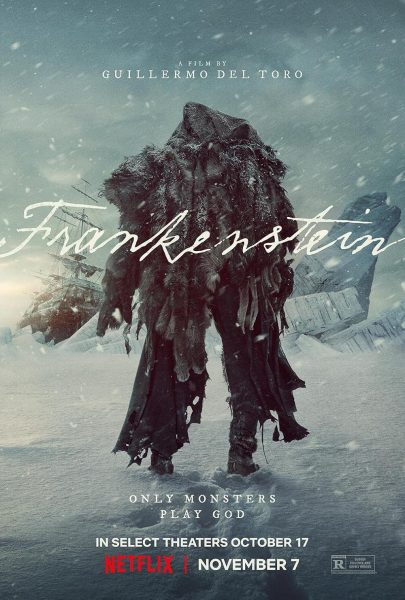
After the 2015 release of Bernard Rose’s lukewarm “FRANK3N5T31N,” my expectations for a new adaptation of “Frankenstein” were low. As a lover of Mary Shelley’s original novel and the 1931 film adaptation, my expectations for a modern adaptation were less than promising. However, Guillermo del Toro’s “Frankenstein” proved me wrong.
Almost every film adaptation of “Frankenstein” has shifted away from Shelley’s now-iconic story. James White’s 1931 adaptation shifted the role of Frankenstein’s monster into a more traditional horror villain, while Bernard Rose’s 2015 adaptation chose to modernize the iconic tale in a failed attempt at societal critique. However, del Toro’s 2025 adaptation is remarkably true to Shelley’s original novel.
One story aspect true to the original is the film’s frame structure. The film’s four segments allow del Toro to illustrate the perspective of both Victor Frankenstein and his creature, a stylistic choice that allows the viewer to sympathize with both the tormented scientist and his neglected creation. The stellar performances of Oscar Isaac and Jacob Elordi as Frankenstein and his creature, respectively, manage to show both the heightened, inhuman parts of each character while also showing them at their most human.
The acting throughout “Frankenstein” gives the film life. As the film’s female lead, Mia Goth’s acting prowess is highlighted through her dual role. She portrays both Elizabeth Harlander, the object of Victor’s affection and the fiancée of his brother, William, and Baroness Claire Frankenstein, Victor’s stony mother who died giving birth to William. As Victor Frankenstein, Isaac finds a way to portray both raw, earnest vulnerability as well as heightened depravity. Similarly, Elordi brings an honest sense of humanity to his inhuman character, making the audience sympathize with the often-unsightly monster.
Much like it’s monster, “Frankenstein” is often raw, scary and unsightly – yet, it’s also a deeply nuanced, complex tale which allows its viewers to fully understand each character. Its unique plot and engrossing storyline allows the viewer to not only watch the film, but be impacted by it.
Director Zach Cregger’s new project, “Weapons,” follows the disappearance of 17 children from an elementary school classroom at night. The film is a haunting and twisted portrayal of communal grief, the ways institutions like schools and government fail families and how innocent people in society are forced into unimaginable positions.
Julia Garner plays the main character, Justine Candy, a teacher whose entire class vanishes. Candy serves as the moral compass of the movie. As the disappearance unfolds, we follow her reluctant descent into suspicion, paranoia and action. Josh Brolin plays Archer Graff, the father of one of the missing children. Graff becomes obsessed with the evidence and ultimate horror behind the vanishing as he restlessly searches for his missing son. Amy Madigan plays the main villain, Gladys, an evil witch who possesses the ability to control people’s minds. She brings a chilling permanence to the horror element, and without it, the film wouldn’t have been nearly as effective. Gladys uses her appearance to seem like a nice old lady, while in reality, she is an evil witch who steals the lives of others.
Portraying a mass spread of trauma throughout a community, the film offers a unique perspective of how parents, teachers and children become entangled in each other’s tensions while their actual emotional needs are ignored. It’s refreshing to see a horror-mystery that is grounded in relationships and emotional aftermath. The film is uniquely structured as it provides multiple chapters that feature the perspectives of different characters. This choice gives weight to the disappearances and the ripple effects of institutional failure.
For the majority of the movie, the plot seemed to be using the classic horror trope of kids vanishing. The beginning is more procedural, investigative and heavy on set-up rather than full-on horror. However, the final quarter of the movie really turns it around. There is a big twist that changes the viewer’s perspective, and the way the characters expose the truth becomes surprisingly visceral and unsettling.
Each of the cast members nailed their roles. Garner masterfully balanced being caring, determined and haunted. Her depiction of a teacher facing the unexplained vanishing of her students is powerful. Brolin gave Archer the perfect amount of desperation and obsession. The standout performance, though, has to be Amy Madigan’s portrayal of Gladys.
“Weapons” is a unique horror film, not only because of its supernatural twist, but also because of the emotional weight beneath it. Cregger turns a horror story into a study of how communities fracture under pressure, how grief reshapes people and how far ordinary individuals will go when their world collapses. With gripping performances and a finale that redefines the entire film, “Weapons” stands out as a horror-mystery that lingers long after the credits roll.
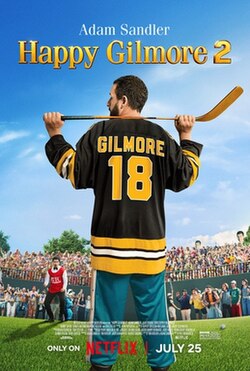
“Happy Gilmore 2”, a sequel to the original cult classic “Happy Gilmore”, follows Adam Sandler as the now-retired Happy Gilmore. Set 29 years after the events of the first film, “Happy Gilmore 2” is a fateful, funny and overall amusing sequel to the original movie.
For almost 30 years, Gilmore had been coasting on his golfing success, but that tragically ended when his wife was killed on a golf course. Still mourning his wife, Gilmore gave up golf and began working in a supermarket while struggling with alcoholism.
However, everything changed when Gilmore’s daughter, Vienna, got the chance to attend a reputable dance school, which Gilmore could only pay for by getting sober and returning to golf.
Happy Gilmore 2 received an audience rating of 64% and a critic rating of 62% on Rotten Tomatoes. The movie was targeted towards the same fanbase as the first movie, and ratings were higher among fans and critics who were fans of the first Happy Gilmore movie.
The film has many notable scenes, like the fight scene between Gilmore and the newly released Shooter McGavin, Gilmore’s past enemy. McGavin had been locked in a psychiatric hospital after his altercation with Gilmore in the first movie, in which he lost the Golf Championship Tour to Gilmore.
The whole fight scene is set in a graveyard, with multiple parts shot at Gilmore’s mother’s grave. In the previous movie, Gilmore was fighting McGavin to get his mother’s house back, so beating up McGavin at his mother’s grave was a witty nod to the first movie.
Despite the positives of the sequel, it loses some value near the end. The story veers off in an oddly goofy manner, with Gilmore fighting to save golf against Maxi Golf, a new and extreme fast-paced golf tournament rising in popularity. Gilmore ultimately outperforms the Maxi Golf team, earning enough money to cover his daughter’s school expenses and preserve the original sport.
Most “Happy Gilmore” fans will enjoy the sequel. The comedic elements from the previous film are continued while still introducing new jokes. “Happy Gilmore 2” guarantees quite a few laughs, especially for long-time fans of the first movie.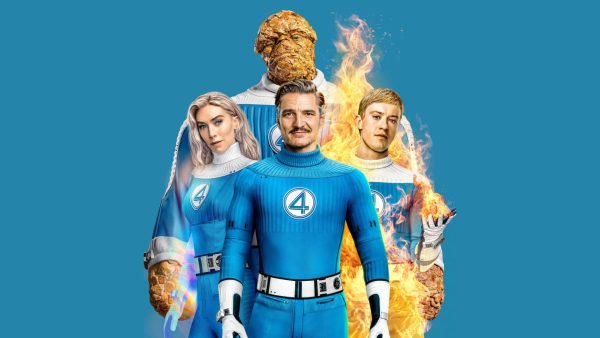
Directed by Matt Shakman, “Fantastic Four: First Steps” follows the journey of four astronauts who, upon being launched into space on an unauthorized test flight of a spacecraft, are bombarded by cosmic radiation, causing them to gain supernatural abilities. I fell in love with this movie instantly. It captivates the audience’s attention with a perfect mix of action and humor. The film runs approximately one hour and 55 minutes, which falls slightly below average for a Marvel movie, but it hits the perfect time to capture the audience’s attention without leaving them bored by the end. In addition, the family-style relationships of the movie are heartwarming, and the way the four superheroes support each other unconditionally makes it an easy re-watch.
Throughout the movie, the audience can recognize plenty of familiar faces. Johnny Storm is played by Joseph Quinn, who is known for his rise to fame as Eddie in the “Stranger Things” series. Another familiar face is Reed Richards, played by Pedro Pascal, who has also recently gained popularity in shows like “The Mandalorian”, “The Last of Us” and “Game of Thrones”. An additional recognizable choice from the director is the costuming, which was inspired by the original blue of the comics, but with extra white accents in the supersuits to provide a simultaneous contrast and unity between the characters.
The technical aspects of the film also stood out and made the movie unique. The CGI in the movie is impeccable and the special effects used for every scene are realistic and fit perfectly in the movie, such as when the four superheroes are in space or when Johnny Storm uses his fire powers to fly around. Another part of the movie I love is the scale used to compare different characters of the movie, showing the sheer size difference between the superheroes and their opponents.
With a mix of action, humor and even romance, this film immediately captivates the audience. “Fantastic Four: First Steps” is a classic superhero movie with highs and lows and real emotion, and is truly a great watch for the whole family.

Directed by Jake Schreier, Marvel’s “Thunderbolts” takes a quieter, more personal look at its characters than many of Marvel’s other films. Instead of focusing on the big battles, the story spends time with a group of anti-heroes who don’t fit the usual heroic themes.
The characters in “Thunderbolts” mainly worked as hired soldiers or villains in other Marvel films. The team only comes together when they are all faced by the same threat from the main antagonist, Valentina. As the team comes together, viewers see their struggles and doubts, making their journey feel more real. Watching “Thunderbolts,” it’s easy to reflect on how complex it can be to make choices, and how doing the right thing isn’t always simple.
Another detail that makes this film unique is its illustration of mental illness, depression and suicide. The exploration of mental health works so well with this movie because it isn’t cheesy or corny. Unlike most superhero movies, “Thunderbolts” shows the real, human struggle of mental health in its characters, which adds a layer of depth to the plot and effectively differentiates itself from other Marvel movies.
One of the main characters, Sentry, serves as an antagonist superhero who has two sides to him. One side of his character is the all-good superhero side, or the “perfect” superhero. The other side we see in the movie is quite the opposite of good, he’s called “the void.” The alter ego of the Sentry is all evil, but still has the same amount of power as the good side.
One of the film’s most notable scenes is when the Thunderbolts meet up at a facility and a massive fight breaks out between the four anti-heroes: Taskmaster, Yelena Belova, U.S. Agent and Bucky Barnes. This scene is great, as it features fast paced action, high stakes and an overall adrenaline-pumping nature. However, there are also points when the film takes a slower pace and gets emotionally deep. For example, at the end of the film, the former enemies are teaming up to defeat “the void.” They are put in a realm of the Sentry’s mind and are trying to fight their way out, but Belova figures out that to win, they must confront Sentry’s dark side. However, instead of confronting him in battle, they show him empathy and teamwork to eventually defeat him.
“Thunderbolts” stands out among Marvel films by blending action-packed moments with a thoughtful exploration of its characters’ inner worlds. By focusing on the complexity of personal struggles and the importance of empathy and teamwork, the film delivers a story that is both thrilling and emotionally resonant. Its honest portrayal of mental health challenges and the depiction of anti-heroes grappling with their own choices gives “Thunderbolts” a unique and lasting impact. Ultimately, the film reminds us that true heroism often lies not in flashy battles, but in understanding, growth and the courage to face one’s own darkness.
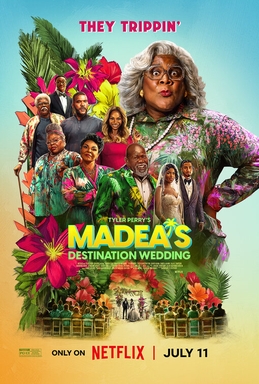
Madea’s Destination Wedding” is a comedy-drama following Madea, a fictional character created and played by Tyler Perry, known for her no-nonsense attitude and sassiness. In the movie, Madea’s grandniece Tiffany, played by Diamond White, is marrying her boyfriend Zavier. However, he’s rushed into it by asking to marry only after a few weeks of dating, which raises suspicion among Madea and the family. When Tiffany introduces Zavier, played by actor Xavier Smalls, to the rest of her family, he doesn’t respond the way they were hoping. He acts like he doesn’t care about them and refuses to answer questions or introduce himself, which makes them feel disrespected. Tensions also rise as Tiffany’s father, Brian, also played by Tyler Perry, begins to feel like a failed father because he can’t afford to pay for the wedding in the Bahamas.
Madea and her family have a habit of turning a calm environment chaotic. Seeing them travel to the Bahamas was fun. Brian continues to try to be a good father, but is being outshined and compared to Tiffany’s mom, Debrah, played by Taja V. Simpson, and stepdad, Dennis, played by Brandon Sutton. It’s only after they all get settled in do they start enjoying their trip. However, Madea is suspicious of Debrah due to her history of hostility and her similar behavior with Zavier. Zavier’s odd behavior and his increased time spent with everyone except Brian also make Brian feel uncomfortable. Madea expresses her concerns in a humorous yet serious way by asking Tiffany, “Let me ask you a question, how much do you really know about this boy?” Debrah answers for her, almost causing Madea to snap when she says, “I was asking her, not you, you are not Tiffany now, hush and let the child speak.”
Cora, played by Tamela J. Mann, was a nice and caring aunt, defending Brian while the rest of the family ridiculed him. Mann did an excellent job – it seemed as though it was natural for her personality to do this. B.J., played by actor Jermaine Harris, is seen as a nerd and a soft kid because of how his dad raised him. His interactions with everyone are funny. The tension between Debrah and Madea was definitely interesting. Madea challenged Debrah by insisting on knowing why she wanted her daughter’s wedding so rushed. Their acting made it so much more dramatic, and it really got me invested.
The outfits they were wearing in the Bahamas were boring. The women wore typical floral dresses and heels, and the men wore overalls, simple colored shirts, jackets, and dress shoes. It would also have been nice if we could’ve seen more of the activities they did in the Bahamas instead of a montage. However, they had a lot of fun, and the last part of the movie is definitely the most dramatic and won’t go exactly how you think it would. It really becomes sentimental towards the end, and some loose ends get tied up. There is still one problem Brian has, but the movie ends before we see the solution.